Acoustic engineering for high rises dealing with highway noise proximity

Featured Image of Acoustic engineering for high rises dealing with highway noise proximity


Acoustic engineering for high rises dealing with highway noise proximity uses soft rubber pads under the base and strong walls rated at STC 45 to stop loud road sounds from moving up into the sky. Low walls on the ground do not help high floors because sound waves travel straight up to the windows with nothing in their way. Fixing this hard noise problem requires a mix of smart building design, dense materials, and huge open gaps to keep the units quiet.

Living near a fast road can cause a lot of stress for people. When you live high up, a giant wall of noise hits your home from thousands of cars each day. If a building does not have the right bones, that loud sound will leak right through the glass. This ruins your sleep, destroys your peace, and makes it hard to relax.

Vertical Sound Propagation: Why Roadside Noise Defies Traditional Barriers


Highway traffic noise moves up in a huge dome shape that flies right over low ground walls, hitting high walls with full force. A small house might hide behind a dirt hill, but a tall tower has a clear view of the road below. As a law of physics, noise drops by 3 decibels each time you double the distance, but echoes from other walls often steal that quiet gain.

The weather also changes how loud the road sounds at night. Wind and warm air layers can trap the sound waves and bend them back down toward the top floors. Engineers use smart computer tools to map these paths so they know exactly how to block the noise.

Architectural Envelopes: Deploying High-STC Façade Systems and Glazing


High-performance window units use a scale called Sound Transmission Class (STC) to show how well they block outside noise. A cheap single glass pane has a low rating of just 25, but homes near a main road need a top rating from STC 45 to 55 to stay quiet. Getting to these high levels requires unique glass designs that kill the sound waves before they cross into the room.

  • Mixed Glass Sheets: Using two distinct glass thicknesses like a 6-millimeter sheet outside and an 8-millimeter sheet inside stops different sound pitches from matching up.
  • Soft Inner Layers: Putting a thin plastic film between the glass panes absorbs the shake of the sound wave and turns it into heat.
  • Large Air Spaces: Leaving a wide gap of 16 millimeters between the panes and adding heavy argon gas slows down the sound waves.
  • Tight Rubber Seals: Using thick rubber strips around the frames stops tiny air leaks that let raw road noise slip inside.

Structural Decoupling: Preventing Structure-Borne Noise and Low-Frequency Rumble


Structural decoupling uses thick rubber pads to separate main building parts so deep truck shakes cannot climb up the concrete bones of the tower. When heavy trucks hit bumps on the road, they send shakes through the dirt that go into the base of the tower. This ground energy turns into a low hum inside the home, turning the walls into a large speaker.

To cut this link, builders place huge rubber pads under the main base columns during the build phase. Inside the rooms, workers lay down floating floors where the wood sits on top of a soft mat. This mat keeps steps and deep truck hums from passing down through the floor to the unit below.

Structural Design Strategy: The Case of Brigade Granada


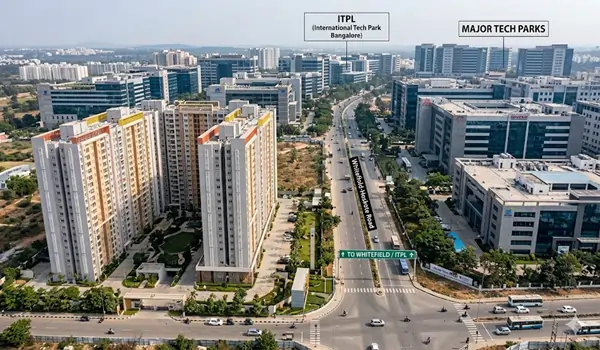
New home layouts near busy city streets must use smart spacing and solid building shields to create a calm space. A great real-world example of this smart work is Brigade Granada, a tall home community built close to a major road link. Because this road stays packed with large cargo trucks and daily cars, the builders had to treat sound control as a main goal.

Instead of crowding the homes right next to the loud street, the plan for Brigade Granada uses space as a natural shield. The builders left 80 percent of the land wide open for green parks, pushing the residential towers far back into the quiet zones. They put office blocks and shops right along the street edge, forming a large wall that eats up the road noise before it can ever touch the homes.

Interior HVAC and Mechanical Silencers: Managing Airflow Without Sound Leaks


Good fresh air design uses lined air pipes and built-in silencer boxes to bring air inside without letting loud road noise follow it. When a home faces a loud road, you cannot just open the windows without letting in a blast of sound. This means the building must run continuous fresh air systems through metal pipes, which can make their own sounds.

Engineers fix this by forcing the outside air to pass through long, maze-like boxes packed with dense insulation. The soft material traps the high whistle of fans and the distant hum of traffic, letting clean, quiet air flow out of the vents.

FAQs


1. How does highway noise change between the ground floor and the 20th floor?

Ground rooms are usually safe behind small hills, low walls, and thick trees, while the 20th floor has a direct view of the road, letting sound fly straight to the glass.

2. What is the best window rating for a tall building next to a highway?

Windows facing a busy road should have a minimum rating of STC 45, though top luxury homes often use elite glass rated up to STC 52 to block deep truck hums.

3. Can soft interior wall panels block out loud highway traffic noise?

No, soft indoor mats only stop echoes and room bounce inside your home; they are far too thin to stop heavy noise from breaking through the outer glass.

4. Why is deep truck noise harder to stop than high-pitched car noise?

Deep truck sounds travel in long, strong waves that carry a lot of physical force, letting them pass through thin walls and shake heavy concrete frames.

5. Does the direction the building faces change the highway noise level?

Yes, turning the narrow side with no windows toward the road creates a natural shadow of quiet along the long sides where people live.

Brigade Granada Blog


Enquiry
Enquire Now